3 Lies, 25 Teams, and One Weekend in Ben Guerir
Feb. 21, 2026In 2015, I sat in the audience at DockerCon Europe. I was just an attendee then, watching the giants of infrastructure take the stage. That spark led me to start giving internal talks at my job. I was building the confidence to speak. By 2018, I found my tribe at TechnoPark Casablanca with the Moroccan IT Community. I then joined the speaking circuit, appearing at BlaBlaConf, Devoxx MA but also BizTech Morocco, and OpenSourceDays, etc. Still, something felt missing.
The turning point came at Devoxx Morocco 2023, during the special session for solopreneurs. Over 70 developers packed the room after a long conference day. They were hungry for an alternative path. We all felt that behind the fears was the possibility of freedom. WebSummit 2023 was another catalyst, with Moroccan indie founders gathered in one place. Seeing global founders ship real products made me realize that speaking inspires, but hackathons ship. I had to stop talking about building and actually help people ship.
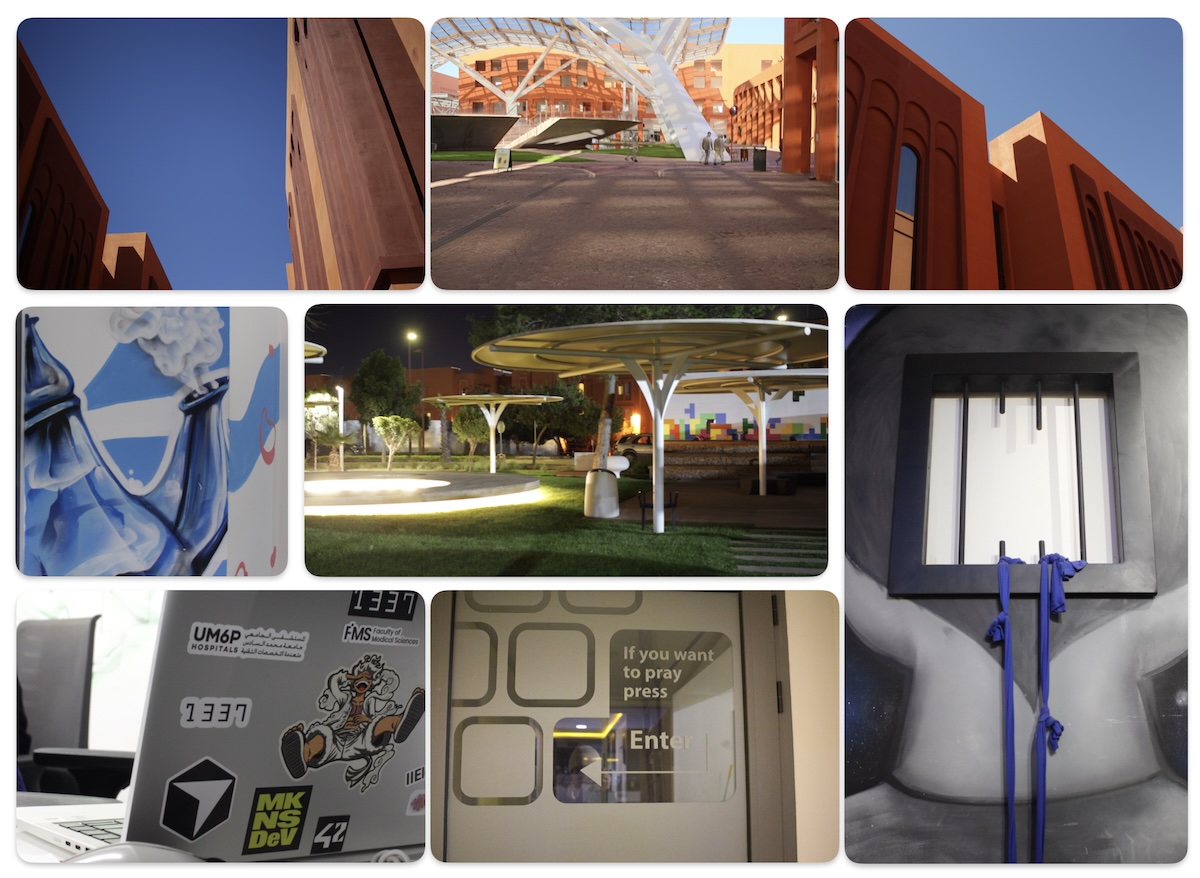
That conviction led to funding local projects (hey @tabarro3.ma) and finally sponsoring the CureCode Hackathon through makeness.dev. It was time to put money and time where my mouth was. Walking into UM6P campus in Ben Guerir last week, I came with maximum focus: as a sponsor, a keynote speaker, and the technical part of the jury. Personally, I wanted to see if the “3 Hidden Lies” I shared with them earlier would survive this amazing 48 hr sprint at 1337 Coding School.
As expected, the atmosphere was over energized, no dead time. You could feel the brains humming off focus with teams building for more than just a trophy. Because healthcare doesn’t forgive mistakes. If a button breaks in a social app, it’s an inconvenience. If a triage engine fails, it’s a disaster. Tarboosh off to organizers Oumayma, Anass, Boushra, Issam and Hicham, they really set the stage for something serious!

So You Think You Can’t Ship?
The first lie is the most common one. We tell ourselves we need the right stack. We say we need to learn more, master the latest framework, or wait for the perfect architecture. We treat shipping as a technical problem. The CureCode answer was a loud, collective “NOPE”. 25 teams shipped working healthcare prototypes in 48 hours. These weren’t simple todo apps. They were systems with complex logic and real-world utility.
Crisis, led by Saad Boubagura, took the top spot. They proved that you can ship a system that remains resilient even when infrastructure fails. They built an Emergency Triage engine with a 3-tier AI fallback system. When Groq hit a limit, it fell back to MiniMax. If that failed, it used zero-latency keyword matching. I was stunned when they showed that “not breathing” or “trapped under rubble” triggers an alert in less than 100ms. That is not just a project. That is a product.
Saha-Tech, led by Aboubaker Fanti, earned second place with Sehatik. This React Native health app integrated Anthropic AI for risk assessment while keeping patient data in encrypted local storage. DeepX, with Anouar Ben Moussa, took a very disputed third place. They built a Hospital Kiosk proof of concept that looked ready for a clinic today. They handled right-to-left support, generated PDF reports, and implemented retry logic with exponential backoff. Wow.
The teams tied for fourth showed wide range. Midimind, with ESSAMIH Imane, built Mama AI, a WhatsApp symptom analyzer that spoke Darija. Blind, led by Maryem El Watiq, used MiniMax to give doctors instant patient context. Pulp Fiction, under Ilyass Ouhsseine, created Bidaya, a three-role system for neonatal care. Healthy Logic, led by Zakaria Didah, mapped out the entire MediFlow from reception to doctor. HELIOS, with El-Houcine El-Yakoubi, shipped SOS-APP, a GDPR-compliant emergency response system with real-time sync.
We have developers who architect complex distributed systems daily risking to be blackholed, yet hesitate to ship a simple landing page. CureCode proved the gap isn’t technical. It’s just about taking that first leap.
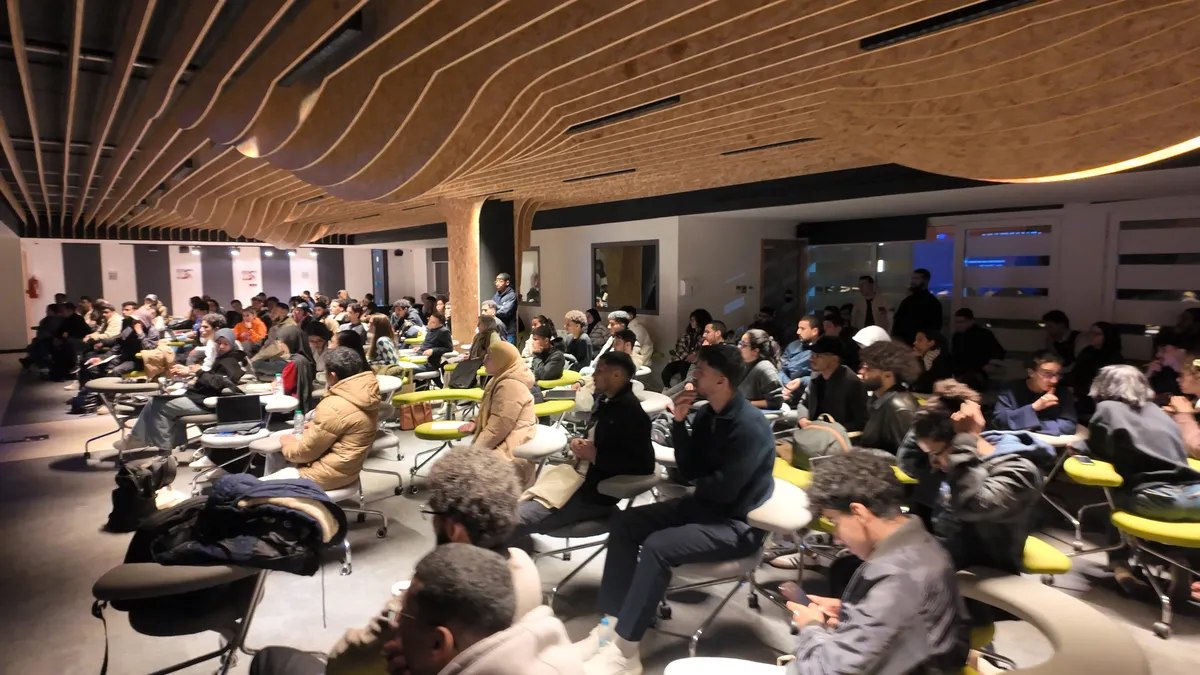
But Can You Sell It?
The second lie is the developer’s shield: “I am a developer, not a salesman.” We pretend that selling is a dirty word or a separate skill. But as I told the students, the best sales pitch is just a one-sentence problem statement. If you can explain how you help a rural diabetic patient solve missed doses via WhatsApp, you are selling. You are providing value.
The teams understood this when they brought medical specialists into their inner circle. They didn’t just have a token doctor to help with the pitch. They had partners who lived the problem. When the jury asked how they knew a problem was real, the winners didn’t quote a Google search. They pointed to their teammate who had seen it in the clinic that morning.
BloodLink, led by Abdelillah Mahdioui, was a prime example. The jury praised its clinical impact above everything else. They understood the urgent humanitarian need for blood bank management in Morocco. Builders, with Ahmed Bouregba, built an interactive epidemiological risk map for Moroccan regions. bloody work, led by M’bark Erras, built Bloody, a blood bank system with ARIMA forecasting. They weren’t just coding. They were selling a future where hospitals don’t run out of blood.
The best demo at CureCode wasn’t the team with the fanciest UI. It was the team where a medical student said: “I see this problem every day in my training.” That’s validation. That’s “Sales” done the natural way.

And What About “Le CDI”?
The third lie is the most persistent one in Morocco. It’s the default path of the CDI, the permanent employment contract. We call it LMATRISK at Makeness.dev. It is the matrix where everyone tells you to stay safe and stay employed. Stability is hard-earned and respected in Morocco, and for good reason.
But LMATRISK mindset says stability is the ceiling. These students showed it can be the floor. A foundation to build your own products on top of. The students at CureCode chose a different path for the weekend. They didn’t build abstract Silicon Valley clones. They built in SoLoMo mode: Social, Local, Mobile.
SmartCare Collective, led by Oussama El Mouekken, created RAYA with Moroccan Arabic text-to-speech. Midimind’s Mama AI used WhatsApp, the universal interface of the Moroccan people. careflow, with Amine Rajma, built Care Companion to work in Arabic, French, and Darija. trinova, led by Maryam Danfali, created Sbitar-link for encrypted patient communication.
These students weren’t waiting for a corporate roadmap to tell them what to build. They were solving problems they will face as patients or as family members. They were breaking silos, so DevOps <3
Wait, what About AI Though?
As the technical hand the jury, I spent a couple hours sifting through the repositories. I saw a pattern that confirmed my keynote’s core warning: AI speed is a paradox. Developers often feel faster with AI, but they can actually be slower. LinearB found that AI-generated code has 41% more churn and gets rejected more often. This happens because AI makes us feel productive while we create technical debt.
The healthcare domain highlighted the risks of “vibe coding.” When AI handles the logic, human-in-the-loop becomes the most important part of the stack. We saw teams grow over the weekend, moving from “prompting” to “engineering” to ensure their systems were secure and reliable. AI doesn’t know what a nurse working a double shift at 3 AM actually needs. It doesn’t understand the specific friction of a Moroccan hospital workflow.
We noticed that teams who treated AI as a brain rather than just hands produced better results. They used reasoning models to evaluate different architectural approaches before generating a single line of code. The domain forced a change in mindset. You couldn’t just guess your way through a medical diagnosis algorithm. You had to know the ESI guidelines or the SNOMED codes.
One team realized that their voice-to-text pipeline would fail in a noisy emergency room. They pivoted to a hybrid model with keyword triggers. That is the kind of engineering that AI can’t do for you. It requires a human who understands the context and the stakes.
In most hackathons, a bug is a broken button. In healthcare, a bug is a misdiagnosis. The domain forced these students to be engineers, not code monkeys.

So Why Was MAKENESS There?
Makeness.dev doesn’t sponsor events just to put a logo on a tote bag. We were there because hackathons are the best laboratory for our DRNA framework: Discover, Refine, Network, Accelerate. The hackathon compresses our curriculum into 48 hours. You have to Discover the problem at speed, Refine your solution with AI, Network with mentors, and Accelerate to a demo.
We reviewed every repository. We saw the talent in teams like techmacy, where Aicha built Pharmaci, a voice pipeline connecting patients to pharmacies. We saw the sheer volume of code from ByteCure Bandits, led by Imad Atyat Allah. Gemini, with Amira Hourmat-Allah, showed us what real encryption and audit logging looks like in Safety-Guard. CliniCode, led by Mariam Assil, and trajon horse, with HAMZA JEMRAGI’s Saitamm Triage, pushed the boundaries of what a weekend project can achieve.
Other teams like 0xAMLO, led by Yousri El Basri, tackled mental health with MoralAi. ninja developers, with Elmehdi Amlou, built MedAware to bust medical myths. We saw the effort from Code4Care, led by Saoussan Alilech, and EpiTech, with Rim Lahlali’s Vaccin-MA system. Fatal error, led by Aissa Lamin, shipped CureLoop connecting frontend and backend AI integrations. Maristan 2.0, with ISMAIL Antar, pushed through with applab. While some teams hit the inevitable 6 AM wall, debugging hallucinations or fighting token limits, the effort was universal. Every team that showed up and demoed something proved they can ship.
The gap in the Moroccan ecosystem isn’t skill. It’s knowing that the path from a prototype to a sustainable business exists. As the technical jury, we saw that the talent is already here. We want to bridge the gap between building something cool and building something profitable. We want to see Moroccan developers as owners of their own products (vs being the product)
The hackathon is over. The building doesn’t have to be.
Now What?
A great indie founder said: “It only has to work once”.
If you built something at CureCode and you are wondering how to take it from a demo to your first paying customer, the MAKENESS curriculum is free and open to you. We don’t want 50% equity. We want your success.
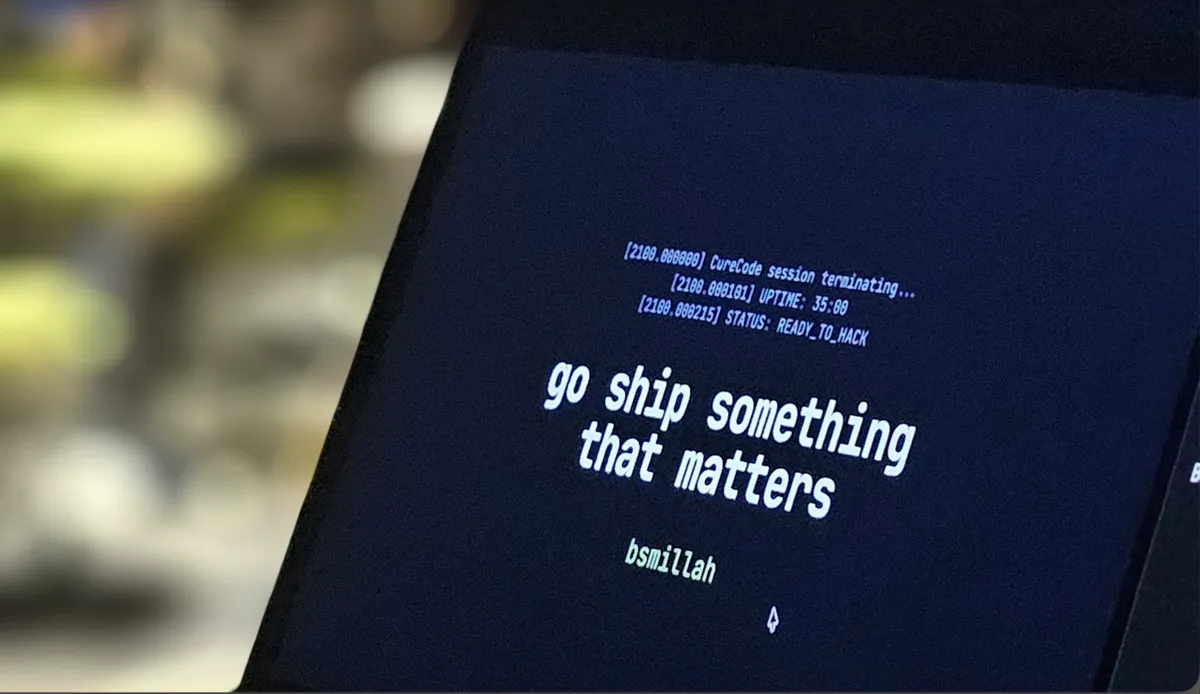
Dir. Ship. Earn.
Links & Resources
- MAKENESS: makeness.dev
- LBLAN : makeness.dev/blan
- Twitter: @MakenessDev
